



















Republic of the Congo: Quick Compliance Facts
- Minimum Wage (SMIG): XAF 70,400 per month (private sector baseline under Decree No. 2024-2762).
- Standard Workweek: 40 hours per week (8 hours per day, Monday through Friday, governed by Article 105 of the Congolese Labour Code).
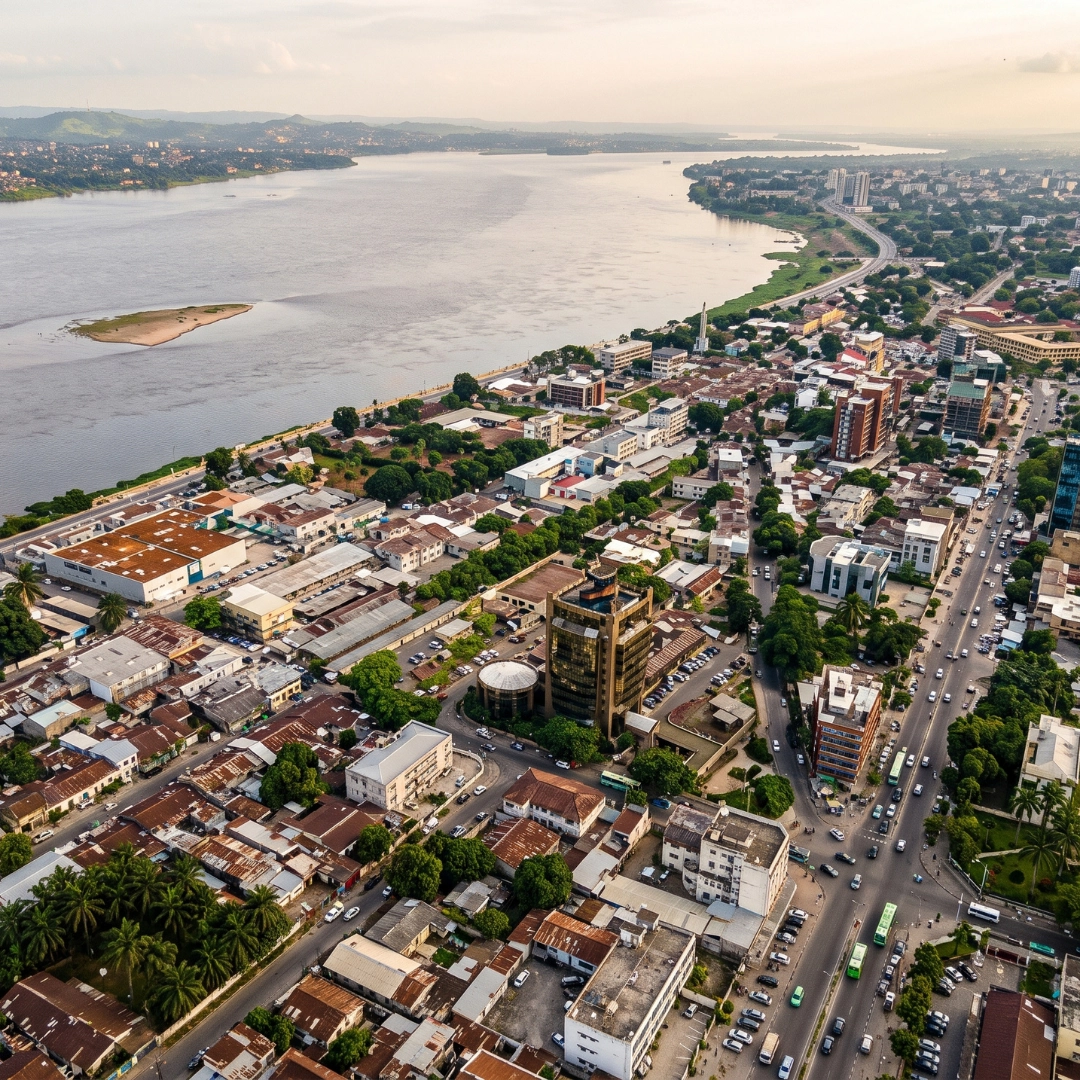
The Republic of the Congo (Congo-Brazzaville) is strategically located along the Congo River basin in Central Africa and serves as a vital gateway for trade within the Central African Economic and Monetary Community (CEMAC). With commercial activity centered in the political capital of Brazzaville and the deep-water maritime and energy hub of Pointe-Noire, the country presents substantial opportunities in hydrocarbons, timber, mining, logistics, and telecommunications.
Operating in Congo-Brazzaville requires navigating a legal environment governed by OHADA corporate law and the Congolese Labour Code (Loi n° 45-75 du 15 mars 1975, as amended by Loi n° 6-96). Direct entity incorporation involves lengthy registration procedures with the Agence Congolaise pour la Création des Entreprises (ACPCE), mandatory workforce quotas, and complex statutory tax withholdings.
Partnering with an EOR in Republic of Congo enables international companies to legally onboard, manage, and pay local professionals without incorporating a legal entity in the country. The Employer of Record acts as the legal employer of record, assuming full responsibility for statutory payroll, benefits administration, tax compliance, and labor authority filings while you retain operational control over day-to-day employee performance.
Employee Benefits
Paid Time Off (PTO)
- Annual Leave: Under Article 116 of the Congolese Labour Code, employees accrue paid annual leave after completing one full year of service. The statutory baseline is 26 working days of paid leave per year (approximately 2.16 working days per month worked). Seniority grants additional days of leave for sustained tenure with the same employer, up to a maximum cap of 31 working days.
- Sick Leave: Certified illness temporarily suspends an employment contract without terminating it for up to 6 months. During this period, salary maintenance obligations are defined by the relevant sector Collective Bargaining Agreement (Convention Collective), typically starting at 100% pay for the initial period and transitioning to partial pay depending on length of service.
- Maternity Leave: Female workers are entitled to 15 consecutive weeks of maternity leave (6 weeks before delivery and 9 weeks after). In cases of diagnosed complications or multiple births, this leave can be extended by up to 3 additional weeks. The employee is entitled to 100% of her normal wages: 50% paid directly by the employer and 50% funded and reimbursed by the National Social Security Fund (Caisse Nationale de Sécurité Sociale – CNSS).
- Paternity & Family Events Leave: Fathers receive 2 paid days of paternity leave upon the birth of a child. Employees are also entitled to paid special event leave: 3 days for marriage and 3 days for the bereavement of a spouse, child, or direct ascendant.
- Public Holidays: Congo-Brazzaville observes 10 statutory paid public holidays each calendar year (New Year’s Day, Easter Monday, Labour Day, Ascension Day, Whit Monday, Reconciliation Day, National Independence Day, All Saints’ Day, Republic Day, and Christmas Day).
Statutory Employee Benefits
- Social Security (CNSS): Registration with the CNSS is mandatory for all salaried staff. CNSS coverage protects workers across three core statutory programs: retirement/invalidity pensions, family and maternity allowances, and industrial accidents/occupational diseases.
- Workers’ Compensation: Medical care, rehabilitation, and disability compensation for workplace injuries or illnesses are fully managed through the occupational risk branch of the CNSS, funded exclusively by the employer.
- Universal Health Coverage (CAMU): The Solidarity Contribution for Universal Health Insurance applies to legal entities and individual high earners on monthly income tranches exceeding XAF 500,000 at a liquidation rate of 0.5%.
- Severance Pay (Indemnité de Licenciement): While state unemployment stipends do not exist, workers dismissed on non-disciplinary grounds (such as economic redundancies or organizational restructuring) are statutorily entitled to severance pay once they meet minimum service requirements, calculated as a percentage of monthly remuneration per year of service.
Private Employee Benefits
- Private Medical Insurance: Because the domestic public healthcare infrastructure faces significant resource constraints, multinational companies utilizing an EOR in Republic of Congo routinely provide private health insurance and medical evacuation coverage for their personnel and dependents.
- Allowances & Supplemental Bonuses: In key technical sectors (oil and gas, ICT, and maritime engineering), total compensation packages frequently incorporate housing allowances, transit stipends, and discretionary 13th-month bonuses (gratification).
Personal Income Tax & The 2026 ITS Framework
- Tax Year & Filing: The tax year runs from January 1 to December 31. For salaried personnel, income taxes are withheld monthly at source by the employer under the Pay-As-You-Earn framework.
- Tax Residency: Individuals domiciled in Congo are taxed on their worldwide income. Non-residents are liable only on their Congolese-source income. Foreign professionals assigned or seconded to Congo for short, limited assignments are subject to a 20% flat withholding tax on their locally earned compensation.
- Progressive Tax Rates (ITS): Under the updated 2026 framework, Personal Income Tax on salaries is assessed using revised progressive brackets per family quotient unit:
| Annual Taxable Income per Family Quotient Unit (XAF) | 2026 ITS Tax Rate |
|---|---|
| XAF 0 – XAF 615,000 | XAF 1,200 (Minimum flat tax) |
| XAF 615,001 – XAF 1,500,000 | 10% |
| XAF 1,500,001 – XAF 3,500,000 | 15% |
| XAF 3,500,001 – XAF 5,000,000 | 20% |
| Over XAF 5,000,000 | 30% |
- The Family Quotient System (Quotient Familial): Congo uses an income-splitting mechanism where single/divorced/widowed individuals count as 1.0 unit, married couples count as 2.0 units, and dependent children add 0.5 units each (up to a ceiling of 6.5 units). Total taxable income is divided by the unit count, taxed under the rate table, and multiplied back.
- Double Taxation Agreements: Congo is integrated into the CEMAC multilateral tax convention and maintains bilateral double taxation treaties with France, Italy, China, Mauritius, and Rwanda.
Payroll Components & Statutory Contributions
- Gross Remuneration: Includes base salary, overtime pay, statutory holiday premiums, cash allowances, and performance incentives.
- Benefits in Kind (Avantages en Nature): Non-cash company benefits are subject to statutory valuation schedules and added to gross pay for both social security and tax withholding.
- Allowable Deductions: Net taxable employment income is calculated after applying the employee’s mandatory 4% CNSS pension contribution and a flat 20% standard professional expense deduction.
| Contribution / Tax | Employer Rate (%) | Employee Rate (%) | Monthly Statutory Ceiling |
|---|---|---|---|
| CNSS – Pension Branch | 8.00% | 4.00% | Capped at XAF 1,200,000 / month |
| CNSS – Family & Maternity | 10.035% | 0.00% | Capped at XAF 600,000 / month |
| CNSS – Occupational Risks | 2.25% | 0.00% | Capped at XAF 600,000 / month |
| Total Social Security (CNSS) | 20.285% | 4.00% | Branch ceilings apply |
| Unique Tax on Salaries (TUS) | 7.50% | 0.00% | Uncapped (Total gross payroll) |
The Unique Tax on Salaries (TUS): The 7.5% Unique Tax on Salaries is an employer-only payroll levy assessed on total gross salary without any ceiling. It consolidates four historical employment contributions into a single payment: the lump-sum tax on salaries, the national apprenticeship levy, the National Housing Fund (FNH) contribution, and the National Employment Office (ONEMO) contribution.
Administrative & Employment Compliance Requirements
- Employment Agreements: All contracts must be written in French. Fixed-Term Contracts (CDD) cannot exceed a maximum duration of 2 years before converting into indefinite-term agreements (CDI). All contracts must be registered and validated by ONEMO.
- Probation Periods: Limited to 1 month for blue-collar workers, 2 to 3 months for technical/administrative staff, and up to 6 months for senior executives (cadres).
- Payment Cadence & Remittance: Payroll runs monthly in XAF. Both tax withholdings and CNSS contributions must be remitted by the 15th day of the following month.
- Termination & Notice: Unilateral termination requires documented justification. Statutory notice periods range from 8 to 30 days for standard employees up to 3 months for executives.
- Immigration & Quotas: Enforces domestic workforce priority (Congolisation des emplois). Securing Temporary Employment Authorizations (ATT) and Work Permits through ONEMO takes 7 to 14 business days for local hires and 4 to 8 weeks for expatriate visas.
Scale Your Operations in Brazzaville and Pointe-Noire Today
Skip the multi-month ACPCE entity setup, complex ONEMO filings, and monthly tax tracking overhead. Remote Solutions Africa acts as your compliant local employer of record, handling secure XAF payroll, CNSS remittances, and contract validation so you can onboard local or international talent in under 2 weeks.