


















Entity Setup vs Employer of Record in Mozambique: How to Choose the Right Market Entry Strategy for Business Expansion

Expanding into new markets across Africa is no longer a long-term ambition for many global companies, it is happening now. Across Southern Africa, foreign direct investment continues to rise, driven largely by energy, infrastructure, and trade opportunities. Mozambique, in particular, has become a strong point of interest for companies in oil and gas, logistics, construction, and professional services.
But while the opportunity is clear, execution is where many businesses struggle.
One of the most important and often underestimated decisions companies face when entering Mozambique is whether to set up a local entity or work with an Employer of Record (EOR).
On paper, the choice looks simple. In reality, it determines how quickly you can hire, how much risk you carry, and how efficiently you operate in the market.
This article breaks both options down clearly, so you can make a decision that aligns with your business goals, timeline, and risk appetite.
Why Mozambique Is on Every Expansion Radar Right Now
Mozambique has steadily positioned itself as one of the more promising markets in Southern Africa. Its economic outlook is being shaped by large-scale natural gas developments, infrastructure investments, and increasing global interest across multiple sectors.
For companies expanding into Africa, a few factors stand out.
First, the country’s natural resource base continues to attract multinational investment. This creates a ripple effect, supporting industries such as logistics, engineering, and business services begin to grow alongside these large projects.
Second, Mozambique offers access to a young and growing workforce. For businesses building operational or support teams, this creates a meaningful advantage.
Third, its geographic location makes it strategically important. With access to key ports, Mozambique serves as a gateway into Southern Africa, supporting regional trade and distribution.
However, these opportunities come with operational realities. Hiring, payroll, compliance, and legal setup are not always straightforward and this is where many companies encounter friction.
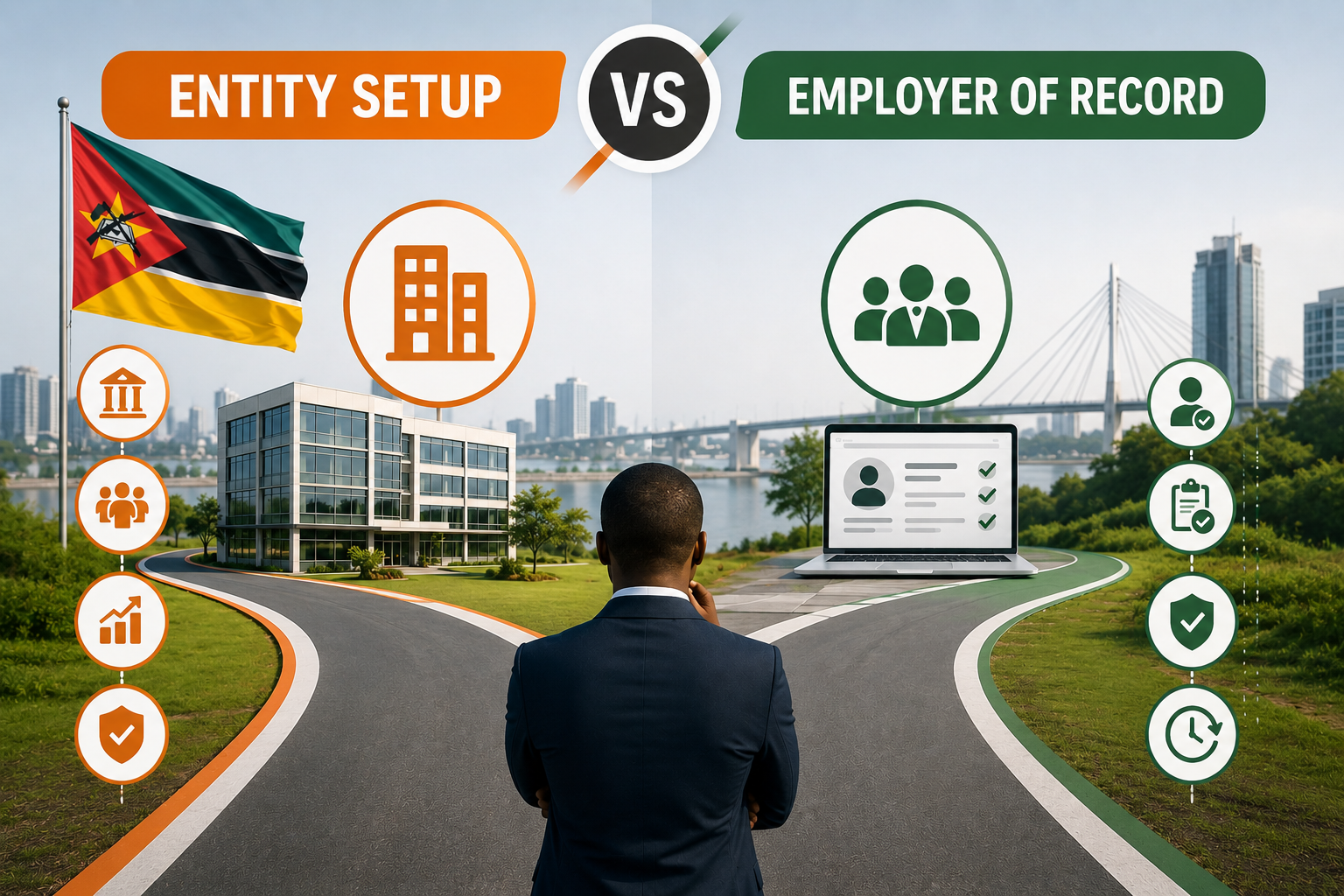
The Big Decision: Set Up an Entity or Use an Employer of Record?

At its core, this decision comes down to four things: control, speed, cost, and risk.
Setting up a legal entity in Mozambique means creating a registered business presence. You gain full control over hiring, operations, and compliance, but you also take on full responsibility.
An Employer of Record, on the other hand, allows you to hire employees without setting up a local company. The EOR becomes the legal employer, handling contracts, payroll, taxes, and compliance, while your business manages the employee’s day-to-day work.
Both models are valid.
The right choice depends on how you plan to operate in Mozambique, whether you are testing the market, building a small team, or establishing a long-term presence.
The problem is that many companies make this decision too quickly, without fully understanding what each option actually involves.
What Setting Up an Entity in Mozambique Really Involves
Setting up a legal entity in Mozambique is a structured but often time-consuming process that requires local knowledge and careful coordination.
It typically starts with company registration. This involves reserving a company name, preparing incorporation documents, and registering with the relevant authorities.
Once incorporated, the business must obtain a tax identification number and register with Mozambique’s tax authority. Companies must also register with the National Institute of Social Security (INSS) before hiring employees.
Opening a local bank account is another necessary step, and depending on the sector, additional licenses or permits may be required.
Hiring employees under your entity introduces further obligations. Employment contracts must comply with Mozambican labor law, and payroll must include accurate tax deductions and statutory contributions.
Beyond setup, the real work begins. Companies must manage ongoing payroll, file taxes, maintain financial records, and stay compliant with labor regulations and that is where Remote Solutions Africa comes in.
For businesses unfamiliar with the local system, this can quickly become complex and resource intensive.
The Hidden Costs and Delays of Entity Setup

One of the most common mistakes companies make is underestimating the true cost of setting up an entity. Registration fees may seem manageable, but they represent only a fraction of the total investment.
There are legal fees, advisory costs, administrative expenses, and internal time commitments. More importantly, there is the cost of delay.
Entity setup in Mozambique can take several weeks to months. During this period, companies are often unable to hire or operate fully. That delay can affect project timelines, hiring plans, and revenue generation.
There are also ongoing costs that continue long after setup. These include payroll management, accounting, tax compliance, and potential penalties if filings are incorrect or late.
Cost Area | Reality |
Registration | One-time, visible |
Legal & advisory | Often higher than expected |
Setup timeline | Weeks to months |
Compliance | Continuous and mandatory |
Risk | High if mismanaged |
These factors are not always obvious at the planning stage, but they significantly impact the overall cost of expansion.
How an Employer of Record (EOR) Model Works in Mozambique
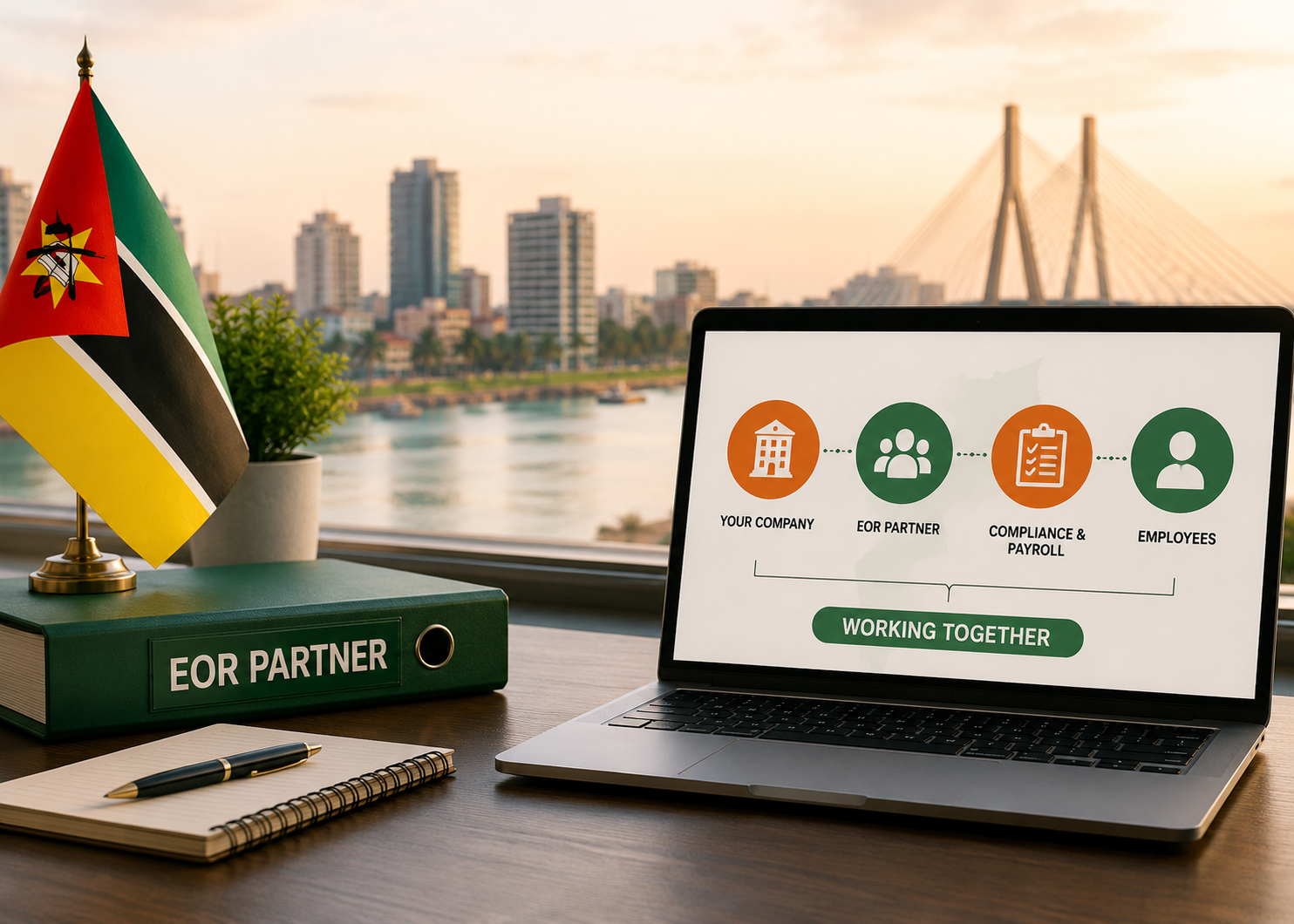
An Employer of Record offers a simpler way to hire and manage employees in Mozambique without setting up a local entity.
Under this model, the EOR becomes the legal employer. They handle employment contracts, payroll processing, tax filings, and compliance with local labor laws.
Your company retains full control over the employee’s role, responsibilities, and performance.
This structure allows businesses to enter the market quickly,often within a much shorter timeframe compared to entity setup.
It also reduces compliance risk, as the EOR ensures that all employment practices align with local regulations.
For companies focused on speed and efficiency, this model removes many of the operational barriers to entry.
When an EOR Makes More Sense Than an Entity
There are clear scenarios where an EOR is the more practical choice.
If you are testing the market, an EOR allows you to hire talent without committing to a permanent structure.
If speed is important, it enables faster onboarding compared to entity setup timelines.
For smaller teams, maintaining a full legal entity may not be cost-effective. An EOR provides a more efficient alternative.
It is also useful for companies that want to reduce administrative burden. Instead of managing payroll, compliance, and HR internally, these responsibilities are handled by the EOR.
For businesses new to Mozambique, this approach significantly reduces risk.
When Setting Up an Entity Might Be the Better Move
While the EOR model offers flexibility, there are cases where setting up an entity makes more sense.
If your company plans to build a long-term presence with a large workforce, an entity may provide better control and cost efficiency over time.
Businesses that need to hold local contracts, assets, or licenses often require a legal entity.
Certain industries may also have regulatory requirements that make local incorporation necessary.
Companies with complex operational structures may prefer to manage everything internally.
The key is to align your decision with your long-term strategy, not just your immediate needs.
Mozambique Compliance Snapshot (What You Must Get Right)
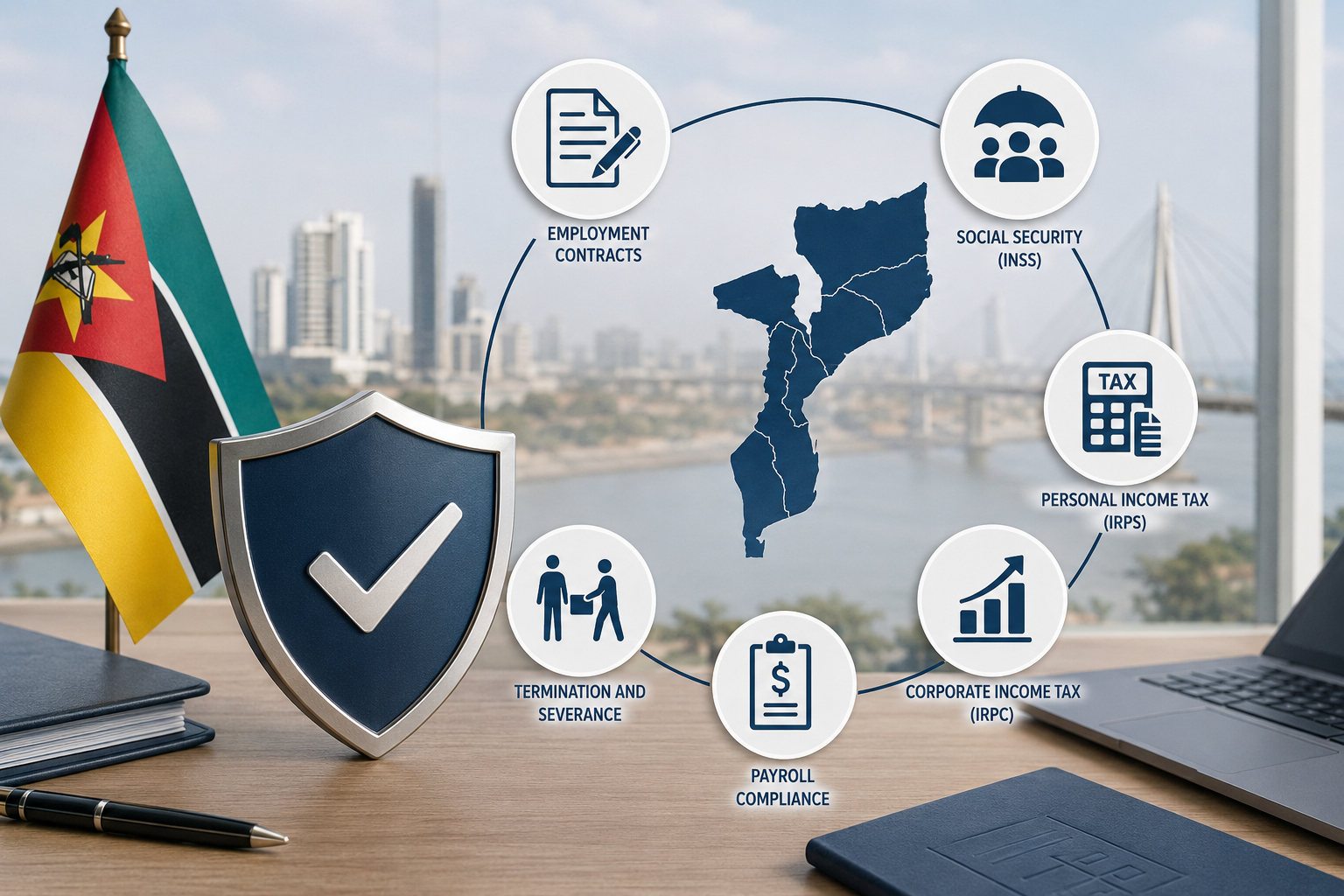
Operating in Mozambique requires strict adherence to local labor and tax regulations. These are some of the key areas companies must get right:
Employment Contracts
Contracts must comply with Mozambican labor law and clearly define job roles, compensation, working hours, and termination terms. In many cases, contracts are expected to align with local language and legal standards.
Social Security (INSS)
Employers must register employees with the National Institute of Social Security (INSS) and make monthly contributions. Both employer and employee contributions apply, and late payments can attract penalties.
Personal Income Tax (IRPS)
Employers are required to withhold Personal Income Tax (Imposto sobre o Rendimento das Pessoas Singulares – IRPS) from employee salaries and remit it to the tax authorities. Accuracy is critical to avoid compliance issues.
Corporate Income Tax (IRPC)
Companies operating through a local entity must comply with Corporate Income Tax (Imposto sobre o Rendimento das Pessoas Coletivas – IRPC), including filing obligations and financial reporting requirements.
Payroll Compliance
Payroll must include all statutory deductions, benefits, and allowances in line with local laws. Proper documentation and record-keeping are essential.
Termination and Severance
Mozambique has structured rules for termination, including notice periods and severance payments depending on contract type and employee tenure. Mishandling terminations can lead to legal disputes.
Compliance in Mozambique is not static. Regulations evolve, and staying aligned requires ongoing attention and local expertise.
Conclusion
Expanding into Mozambique offers strong opportunities, but success depends on how well you manage the operational realities.
Choosing between setting up an entity and using an Employer of Record is a strategic decision. An entity gives you long-term control but requires time, resources, and ongoing compliance. An EOR offers a faster, more flexible way to hire and operate specially when entering a new market or scaling gradually.
The right choice depends on your goals, timeline, and level of commitment. What matters most is having a clear structure that keeps your business compliant while allowing you to move efficiently.
With the right support, navigating Mozambique’s regulatory landscape becomes far simpler, helping you hire confidently and focus on growth instead of administrative complexity.
For companies exploring expansion, guidance from Remote Solutions Africa can help turn a complicated process into a clear, executable path forward. We give you access to practical expertise that simplifies hiring, payroll, and compliance in Mozambique so you can focus on scaling your business with confidence.